UNIVERSITÄT BERN

STRADA

Scientific Transformations through the Alliance of Domain Knowledge and AI

Event Type: Talk

  • Computer-aided proofs in first-orderoptimization, with applications to error feedback

    Computer-aided proofs in first-orderoptimization, with applications to error feedback

    First-order methods are widely used in optimization and machine learning, and their behavior is often
    analyzed through the spectrum of worst case convergence rates. Obtaining such guarantees is often
    difficult and both time consuming and error-prone. Starting with the work of Drori and Teboulle (2014),
    novel techniques have been used to gain numerical insights, leading to the release of various
    performance estimation (PE) software.
    In this talk, I will show how various computer-aided techniques can be used to study first-order
    optimization methods in a systematic way. From performance estimation problems with automated
    Lyapunov discovery, to symbolic regression and computer algebra systems, novel tools completely
    reshape the way we approach theory of optimization.
    As a main example, I will focus on error feedback methods used with compressed communication in
    distributed optimization. While error feedback has been widely studied, existing theory often provides
    untight (thus unreliable) bounds. I will present tight analyses with matching lower bounds that allow a fair
    comparison between error feedback schemes and standard compressed gradient descent, and help
    explain when error feedback is useful and when it is not.
    Overall, the talk aims to show how various computer-aided proofs can lead to clearer and more reliable
    insights into first-order optimization methods.

  • From Pixels to Actions: AI-Driven Approaches for Spatial Biology

    From Pixels to Actions: AI-Driven Approaches for Spatial Biology

    Advances in spatial and multiplexed imaging technologies are revealing the intricate organization of human tissues at single-cell and molecular resolution. However, transforming these rich datasets into biological and clinical insight requires new computational paradigms. In this talk, I will present how modern AI and machine learning methods, ranging from classical machine learning models to generative AI, are redefining the analysis of 2D and 3D spatial omics data. More importantly, I will illustrate how these approaches enable functional cell type discovery, cancer subgroup identification, and in silico spatial experimental design, translating data into actions for precision medicine.


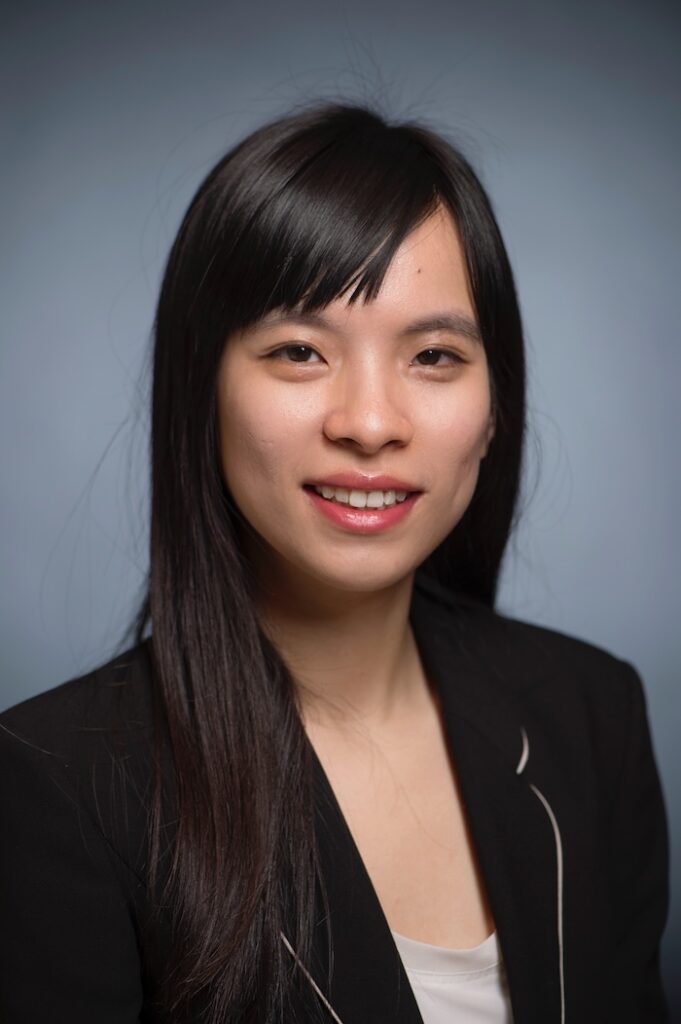
    Dr. Yuqi Tan, Instructor (Microbiology & Immunology, a non-tenured faculty track) at Stanford University, holds a BSc in Cell and Molecular Biology from the Chinese University of Hong Kong and a PhD in Computational Biology from Johns Hopkins University. With a record of more than 20 scholarships and awards, she specializes in crafting computational tools that integrate and transfer knowledge across various single-cell data modalities, whether in two or three dimensions. Her expertise finds practical applications in determining cell type identities and elucidating the spatial orchestration of cell types, especially within the domains of stem cell engineering, cancer immunotherapy, cancer initiation, and psychiatric diseases.

    Website: https://yuqiyuqitan.github.io/

  • From Algorithms to Explanation: Using Explainable AI to Understand Human Behaviour

    Digital data and artificial intelligence are shaping our world more than ever before. But how can these powerful tools be leveraged to generate meaningful insights for psychological and social science research? In this talk, Rosa Lavelle-Hill will introduce two key approaches for moving from algorithms to explanation: interpretable machine learning models and explainable AI (XAI) methods. She will then illustrate these approaches with examples from her own research, with a particular focus on applications that promote social good.

  • An introduction to operator learning and solving differential equations with Gaussian processes

    11:00-12:00

    An introduction to operator learning and solving differential equations with Gaussian processes

    13:30-15:00

    Hands on operator learning with Gaussian processes


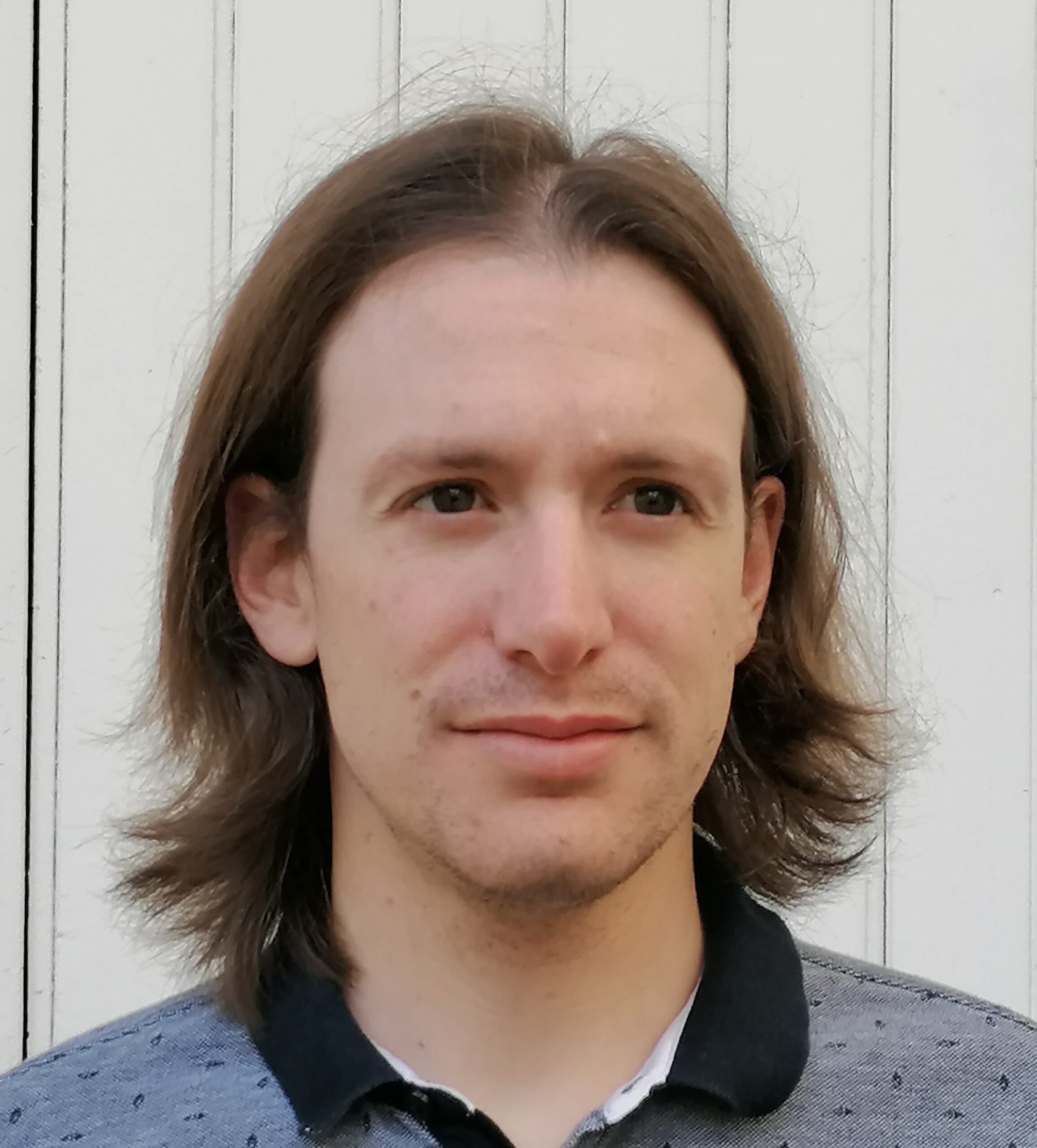
    Matthieu Darcy is currently a fifth year PhD student at the Mathematical Sciences Department, California Institute of Technology, working under the supervision of Houman Owhadi, with main research interests in scientific machine learning, specifically in learning and predicting stochastic (partial) differential equations and stochastic time series. 

    Website: https://www.matthieudarcy.com/